
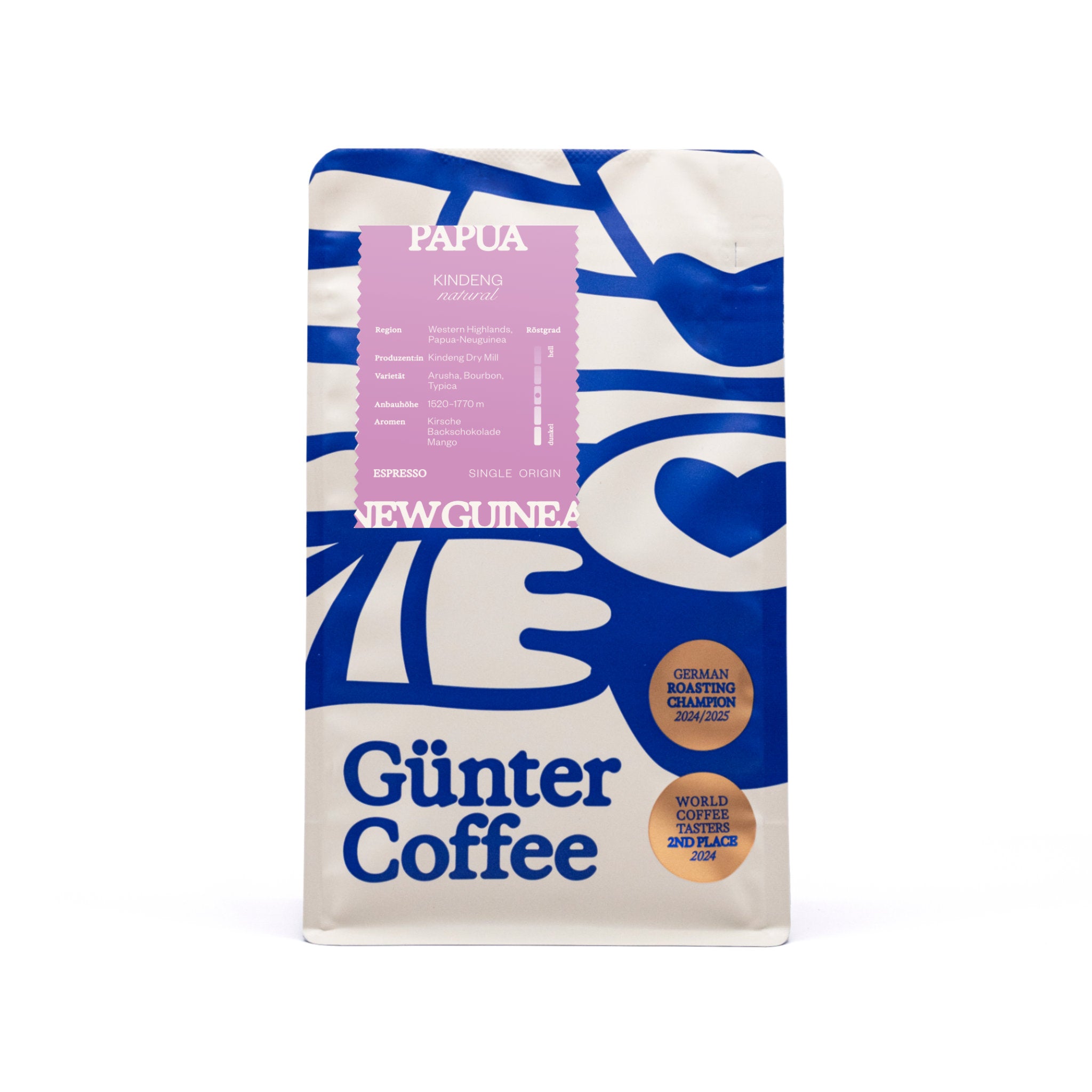
PAPUA NEW GUINEA Kindeng Espresso
Roast Level: ? The roast level indicates how light or dark the beans are roasted. The lighter the roast, the more the natural aromas of the coffee are emphasized, including acidity. The darker the roast, the more the roasted aromas come to the fore.
 Suitable for French Press
 Suitable for Portafilter
 Suitable for Espresso Pot/Mocha Pot
 Suitable for Filter Coffee
PAPUA NEW GUINEA Kindeng Espresso
250 g / Ganze Bohnen
Merianstraße 8 (Hinweise beachten)
Merianstraße 8
79104 Freiburg im Breisgau
Germany

Choose options
Roast Level: ? The roast level indicates how light or dark the beans are roasted. The lighter the roast, the more the natural aromas of the coffee are emphasized, including acidity. The darker the roast, the more the roasted aromas come to the fore.
Suitable for French Press
Suitable for Portafilter
Suitable for Espresso Pot/Mocha Pot
Suitable for Filter Coffee
Roast Level: ? The roast level indicates how light or dark the beans are roasted. The lighter the roast, the more the natural aromas of the coffee are emphasized, including acidity. The darker the roast, the more the roasted aromas come to the fore.
Suitable for French Press
Suitable for Portafilter
Suitable for Espresso Pot/Mocha Pot
Suitable for Filter Coffee
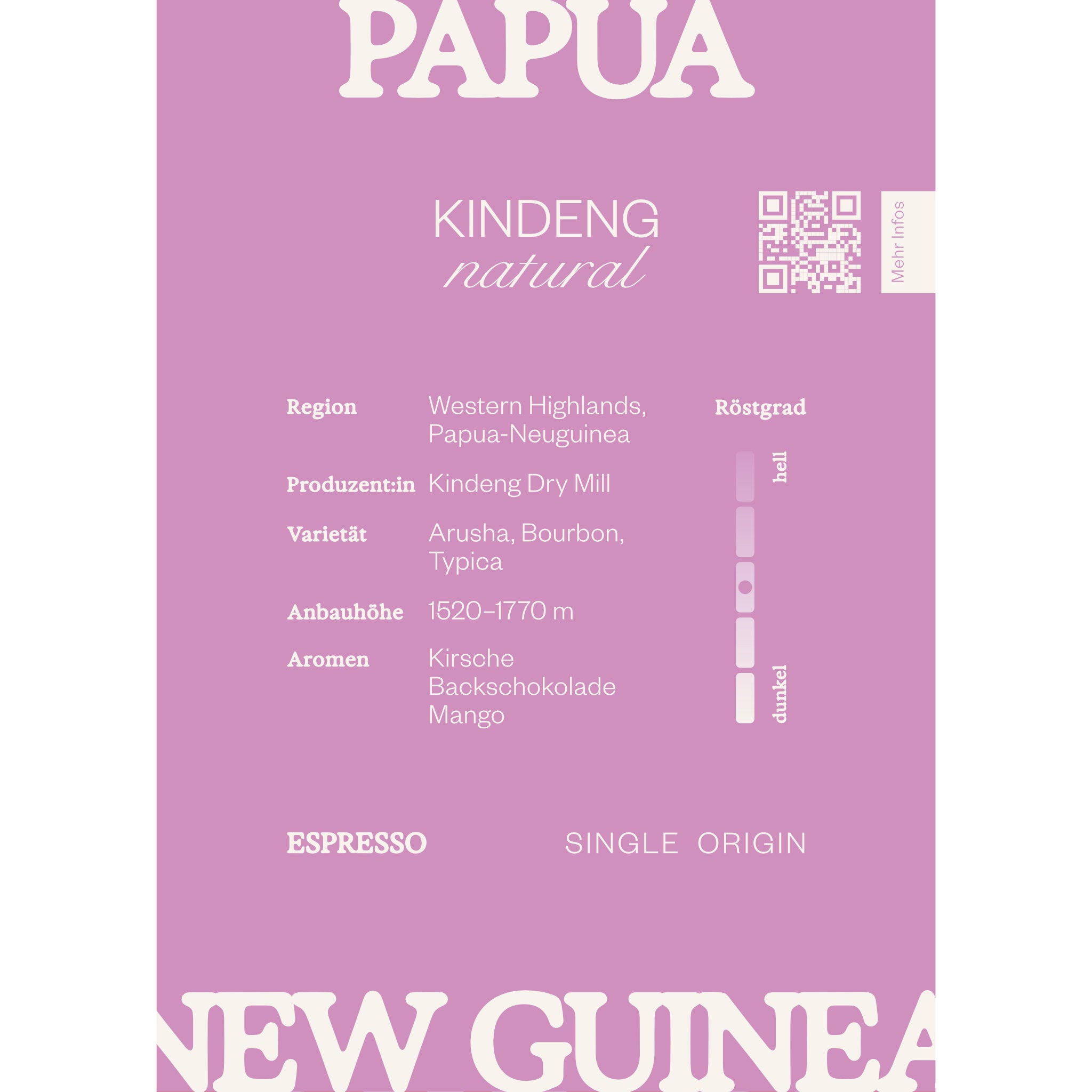
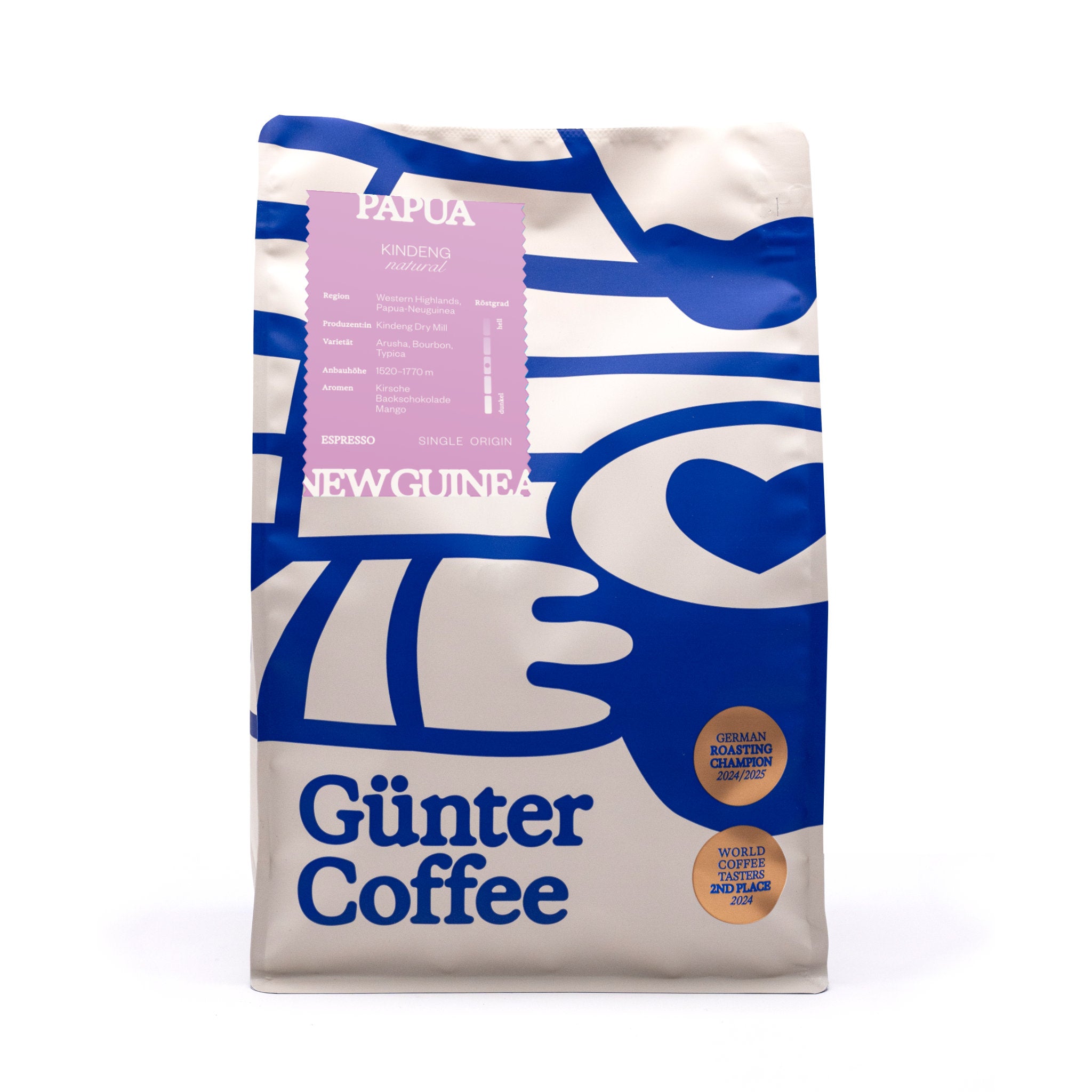
Unsere Kaffeebohnen Papua New Guinea Kindeng schmecken fruchtig-süß mit Noten von Kirsche, Backschokolade und Mango.
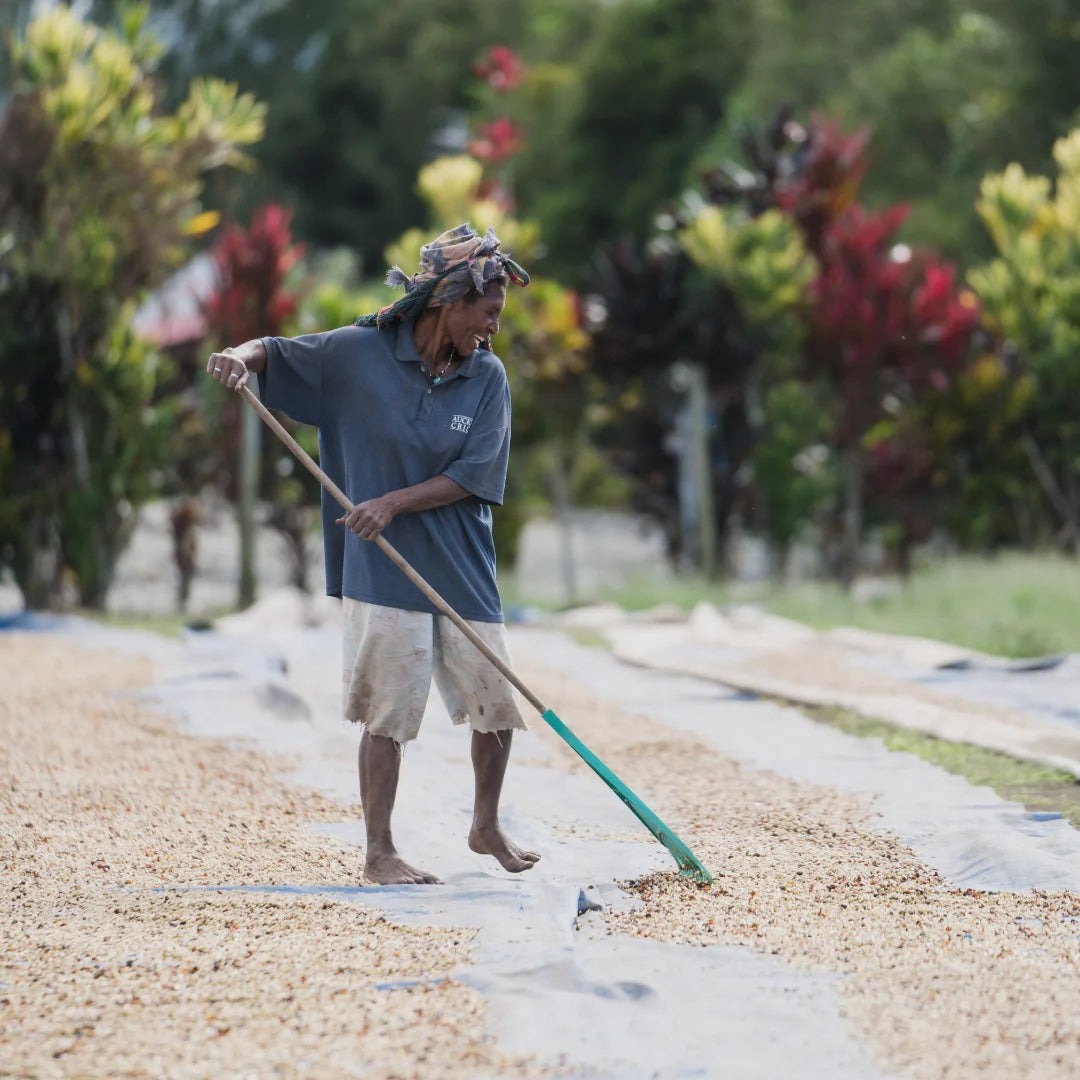
Der als natural aufbereitete Rohkaffee stammt von der Kindeng Dry Mill, einer Aufbereitungsstation in Kindeng, die sich in den Western Highlands Papua-Neuguineas befindet. Um die 1500 Farmer:innen bringen ihre Kirschen von kleinen Farmen mit 1-2 Hektar Anbaufläche zur Kindeng Mill, wo diese weiterverarbeitet werden. Die Region eignet sich aufgrund ihrer Höhenlagen, einer dichten Bewaldung und lehmigen Böden perfekt für den Kaffee- und Teeanbau. Die Kaffeepflanzen aus diesem Lot werden um die Gemeinden Arufa und Kindeng angebaut und bestehen aus einem Varietätenmix von Arusha, Bourbon und Typica aus der Arabica-Art.
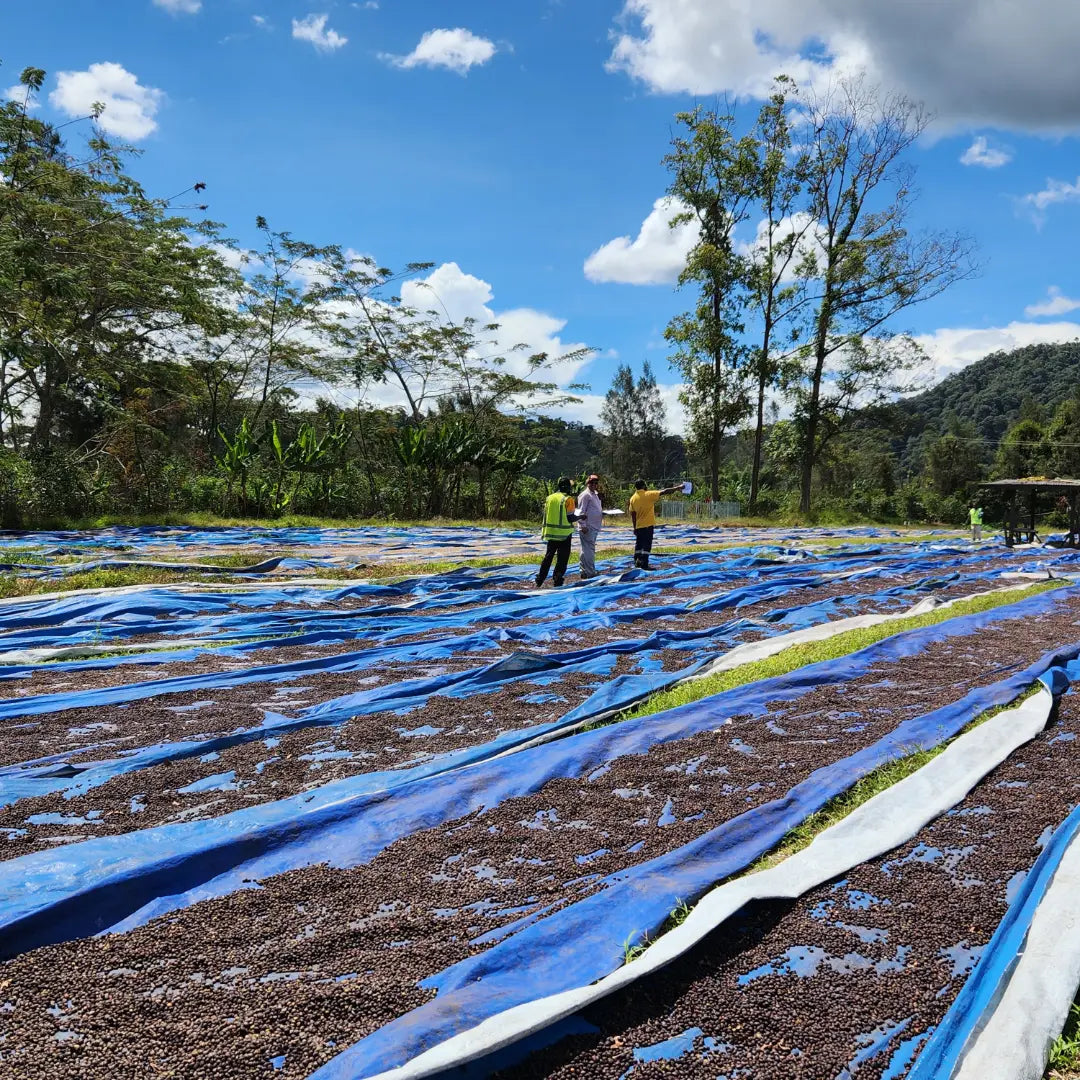
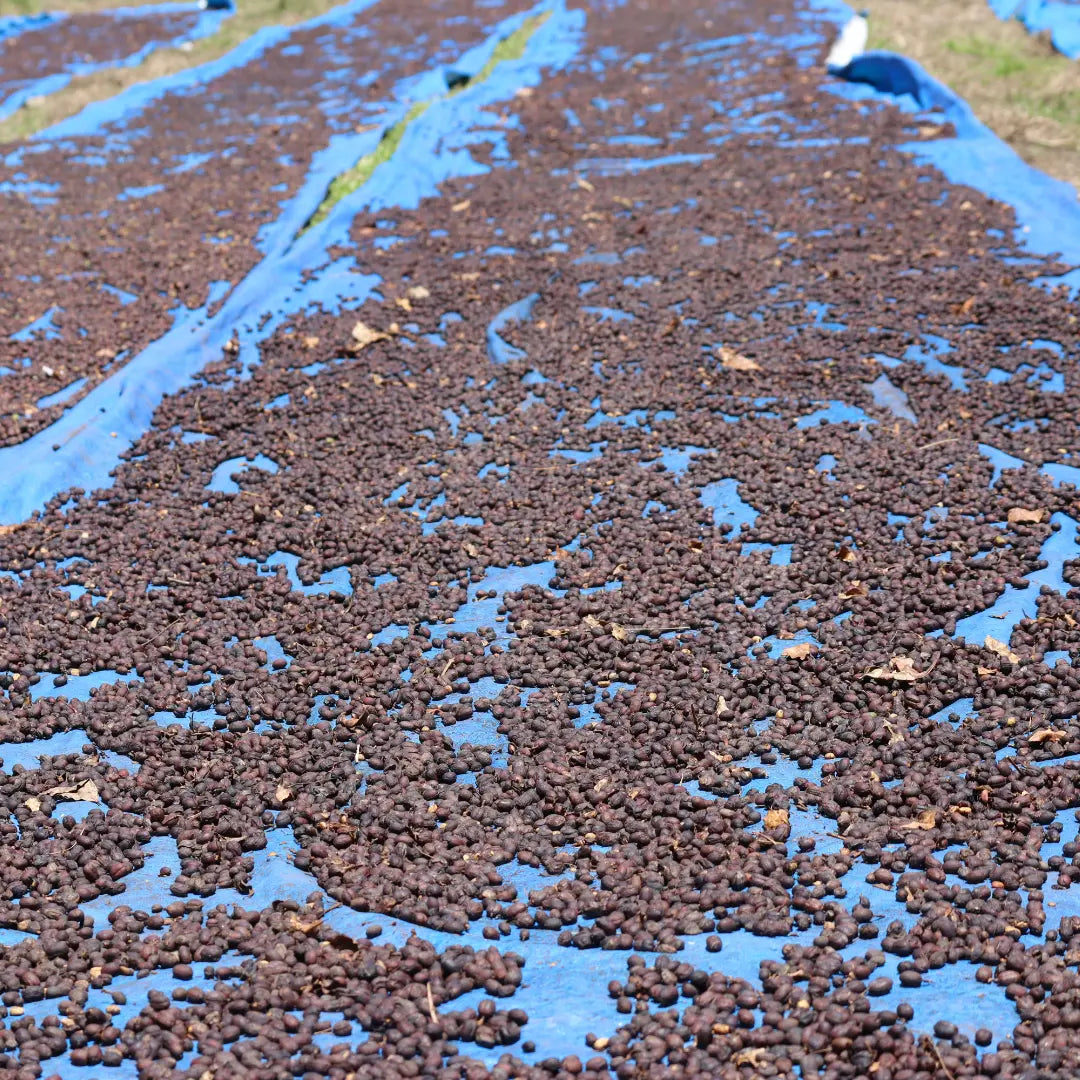
Nachdem die Kirschen in der Mühle angekommen sind, werden sie auf Hochbeeten und ebenen Flächen getrocknet. Während des etwa einmonatigen Trocknungsprozesses werden sie mehrmals täglich bewegt, um einen gleichmäßigen und einheitlichen Feuchtigkeitsgehalt zu gewährleisten. Sobald der Kaffee auf etwa 12 % Restfeuchte getrocknet ist, wird er geschält und in Säcke abgefüllt. Nach einer kurzen Lagerungszeit in einer kühlen, trockenen Halle, wird er für den Export vorbereitet. Zu uns kommen die Bohnen über unseren langjährigen Partner Café Imports. Wir freuen uns, dir diesen Kaffee wieder präsentieren zu können, diesmal als Espressoröstung.
Our tips for preparation with a portafilter machine
To obtain a balanced espresso shot (double shot), we recommend the following parameters for preparation:
E61 brew groups
- Dose (In): 18.0 g coffee grounds
- Yield (Out): 38.0 g espresso in the cup
- Extraction time: 25 - 30 seconds
- Water temperature: 94 °C
Entry-level machines (e.g. DeLonghi Dedica)
- Dose (In): 11.0 g coffee grounds
- Yield (Out): 30.0 g espresso in the cup
- Extraction time: 21 - 24 seconds
- Water temperature: not adjustable
Entry-level machine with extra portafilter
- Dose (In): 16.5 g coffee grounds
- Yield (Out): 40.0 g espresso in the cup
- Extraction time: 25 - 28 seconds
- Water temperature: not adjustable
Note: These are guidelines for preparation with a portafilter machine to approach the ideal coffee taste. You can find precise information on how to best prepare your espresso in our blog post "How to prepare espresso correctly". Further information can be found in our articles on solutions for overly sour espresso, bitter espresso or dialing in your coffee grinder.
The perfect coffee is no accident
Prepare coffee correctly
Dirty Chai zubereiten: Das Rezept für die perfekte Fusion aus Würze und Espresso
Wie viel Kaffeepulver pro Tasse? Schnelle Antworten für jeden Löffel
How to Make the Perfect Iced Filter Coffee

Get 5% off 📯
OUR COFFEE BEANS
Günters Müntermacher