

A pure espresso is sometimes a touch too intense for you, but a cappuccino or flat white contains too much milk? Then the espresso macchiato is the perfect choice. It combines the unadulterated strength of coffee with a delicate, velvety milk sweetness. In this guide, you will learn what makes this drink special, how to prepare it step by step, and the story behind this little classic.
What is an espresso macchiato?
An espresso macchiato (usually simply caffè macchiato in Italy) is an espresso that is refined with a small sip of finely aerated milk. Unlike milk-heavy drinks such as cappuccino or latte macchiato, the espresso here clearly remains the main character.
What makes the espresso macchiato special is the unusual ratio compared to other coffee-milk mixed drinks: We pour the aerated milk on in a 1:2 ratio to the espresso. This means: For two parts espresso, there is one part milk (foam). Whether you enjoy it as a single or double shot is entirely up to your personal preference.
What you need for preparation
To prepare it using a portafilter machine, you need the following equipment and ingredients:
- Portafilter machine with steam wand
- Coffee grinder
- Fresh coffee beans
- Tamper & precision scale
- Small milk pitcher
- Cold milk or a plant-based barista alternative (we recommend oat milk)
- Pre-warmed espresso cup
- Clean cloth for the steam wand
Everything ready? Then you can get started on the preparation.
Step 1: Grind and pull the espresso

We always pull our espressos as doubles. In this case, one espresso will initially end up in the pitcher.
The basis for an excellent result is a cleanly extracted espresso. How to determine parameters such as grind size and flow time exactly, we show you in detail in our Espresso Brew Guide.
- Grind the beans fresh into the portafilter, distribute the coffee grounds evenly, and tamp with even pressure.
- Lock the portafilter in and pull either a single espresso (approx. 20–25 ml) or a double espresso (approx. 40–50 ml), depending on your preference.
- Let the espresso flow directly into the pre-warmed espresso cup so that the temperature remains stable and the crema stays intact.
Step 2: Creamily aerate cold milk

We aerate our milk. Either fresh organic whole milk or Oatly Barista. Other milk alternatives are of course also allowed.
For the espresso macchiato, you only need a very small amount of milk foam. Since tiny amounts are difficult to roll in large pitchers, the smallest possible milk pitcher is suitable for this.
- Fill the pitcher with cold milk (maximum to the lower start of the spout) and briefly blow out the steam wand to remove condensation.
- Dip the steam wand tip just below the surface and start the steaming phase to incorporate fine air bubbles.
- Go directly into the rolling phase by lifting the pitcher slightly so that the milk rotates and a homogeneous, glossy microfoam texture is created. As soon as the pitcher is hand-warm to a maximum of 65 °C hot, you stop the steam.
- Clean the steam wand immediately with the damp cloth and blow it out briefly again.
- Tap the pitcher gently once on the work surface and swirl it so that the liquid milk and foam combine perfectly.
You can find more tips in our milk frothing guide.
Step 3: Pour milk and espresso in a 1:2 ratio

We pour the aerated milk onto the freshly pulled espresso.
Now you combine both components. The goal is not to completely drown the crema, but to give the coffee a velvety crown:
- Hold the espresso cup slightly at an angle.
- Now pour the milk quickly and controlled in a 1:2 ratio to the espresso. For a single espresso (approx. 20 g), you add about 10 g of aerated milk; for a double espresso, correspondingly around 20 g.
- By pouring, the fine milk foam settles in the center on the crema and creates the typical contrast between the dark coffee rim and the white foam core.

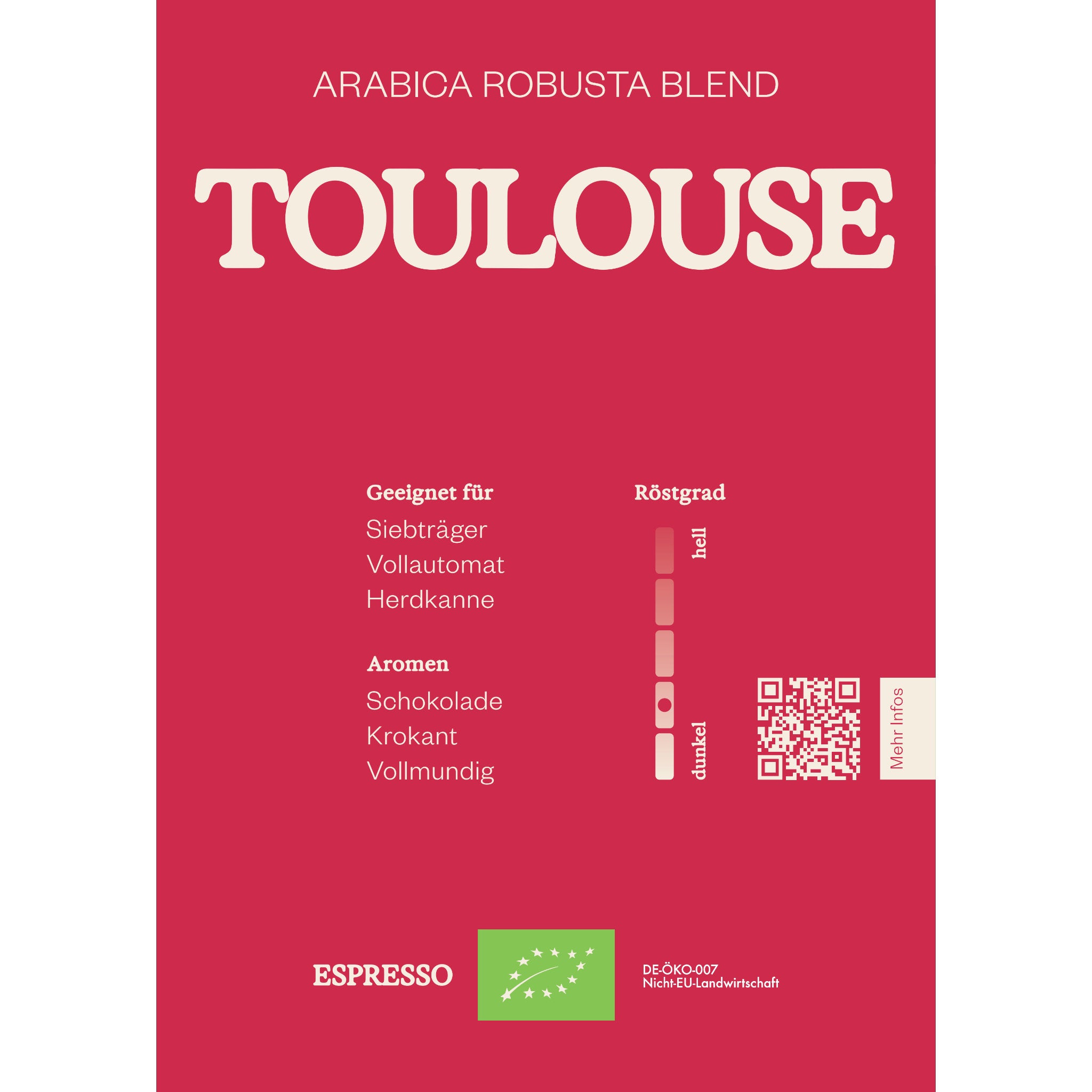
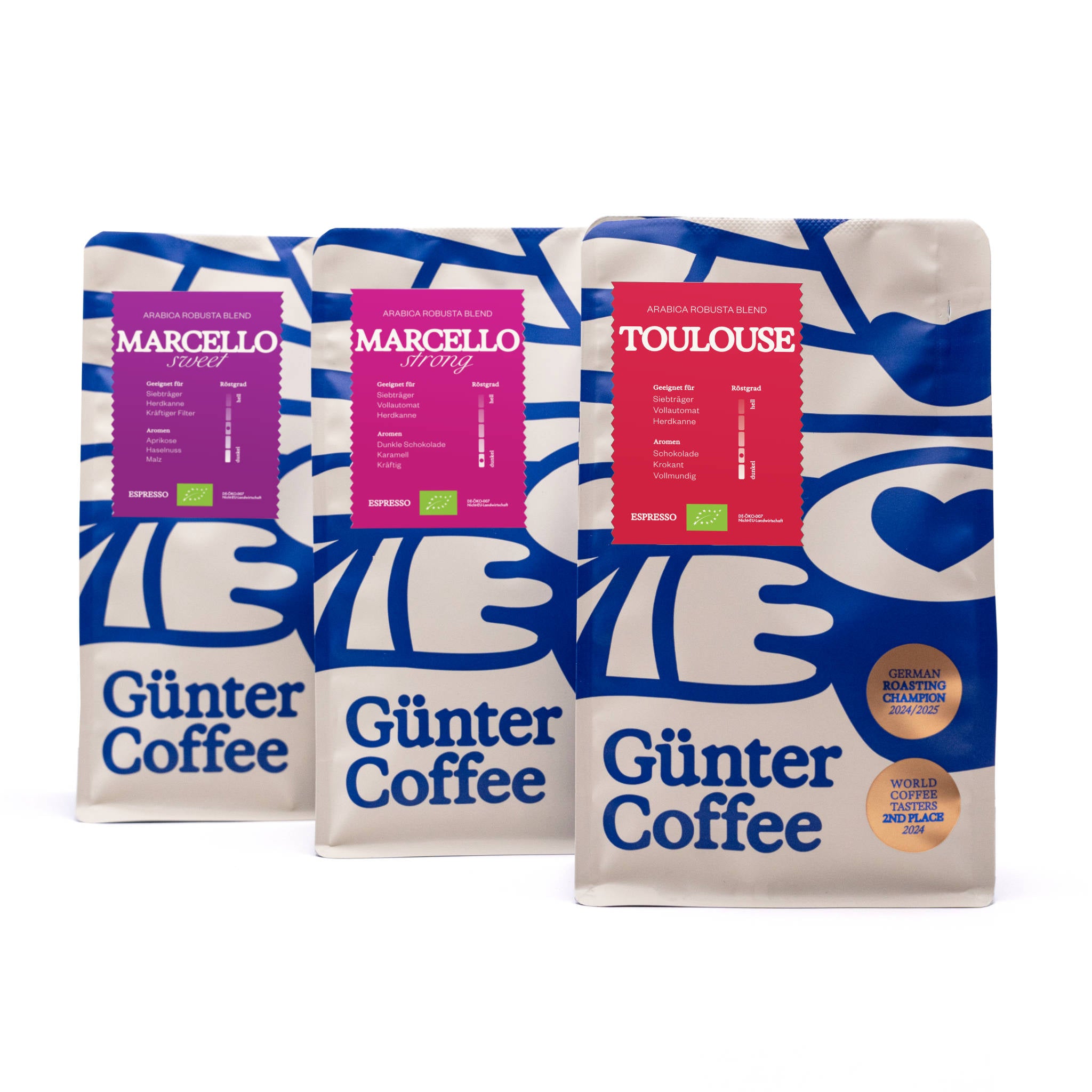
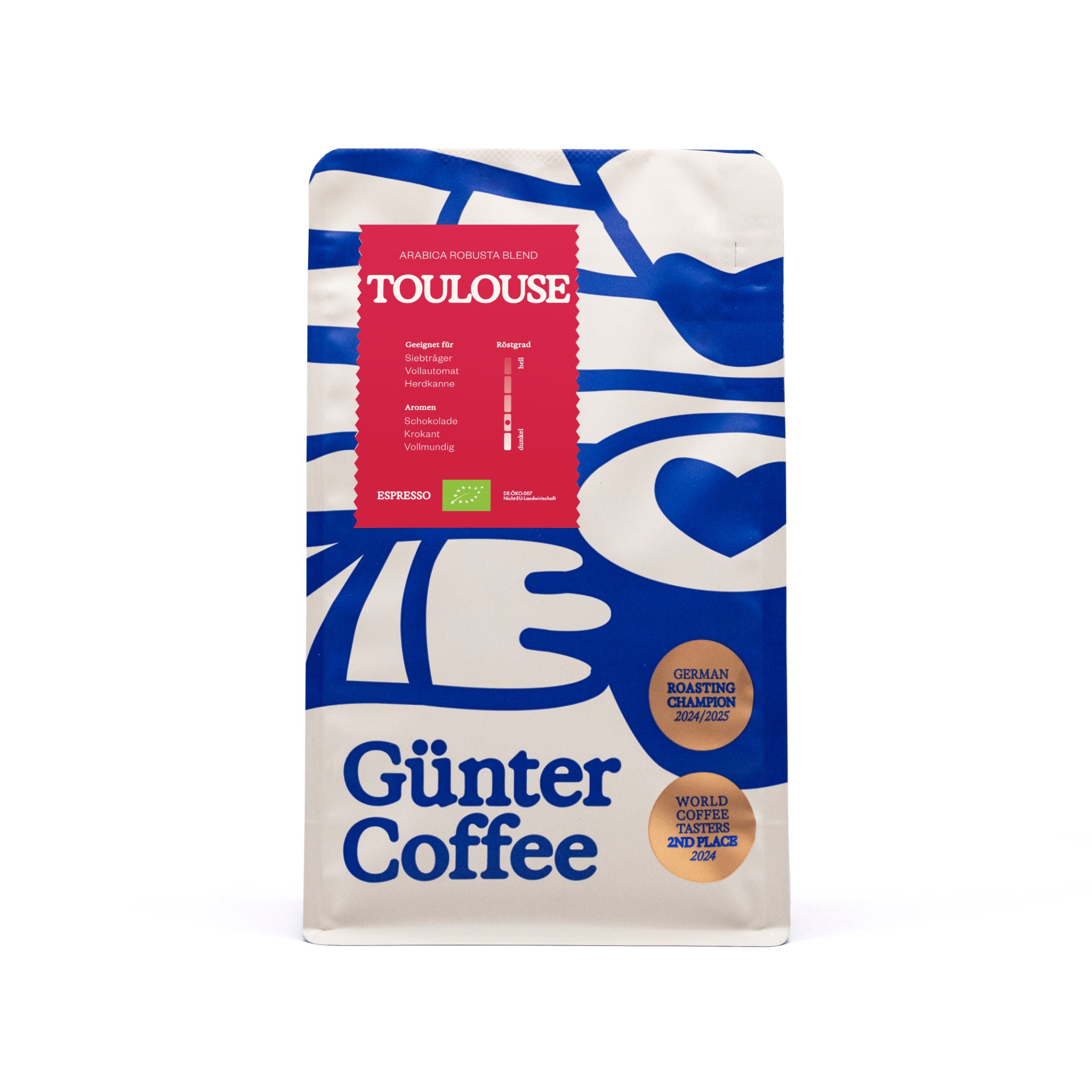
We taste Schokolade, Brittle und Full-bodied. What do you taste?
Try our TOULOUSE Blend Organic.


Where does the espresso macchiato come from?
The origin of the espresso macchiato leads directly into the traditional bars of Italy. During the busy morning hours, it was often hectic behind the counter. Baristas faced the challenge of signaling to the waiters at a glance which cups contained pure black espresso and which were intended for guests who wanted a little drop of milk.
Out of this pragmatic necessity, baristas began to provide the espressos for the milk orders with a small spoon of milk foam. This way, the service staff could immediately distinguish the cups on the tray without having to ask or taste.
Where did the espresso macchiato get its name?
The word macchiato is the Italian participle for "stained" or "marked" (derived from the verb macchiare). The name therefore literally describes the appearance of the drink: An espresso that has been marked by a white spot of velvety milk foam.
Conversely, the principle works with the latte macchiato: Here it is the warm milk that is "marked" with a coffee stain by pouring in the dark espresso.
Do you prefer to drink your espresso macchiato as a single or as a double shot – and which beans do you like to use for it most? Feel free to write it to us in the comments!