

The intense aroma, the hazelnut-brown crema, the first sip in the morning—for many of us, the day only truly begins after a really good espresso. But what exactly ends up in our small cup? Is espresso a special coffee bean? And why does it often taste so much more balanced in our favorite café than from the machine at home?
In this article, we'll debunk myths and take a look at what makes a true espresso in the cup. We'll clarify why the coffee grinder is often the secret star in your kitchen and how to distinguish excellent espresso from poor one. Get ready for a small journey into the world of pressure, grind size, and extraction.
When is a coffee actually called an espresso?
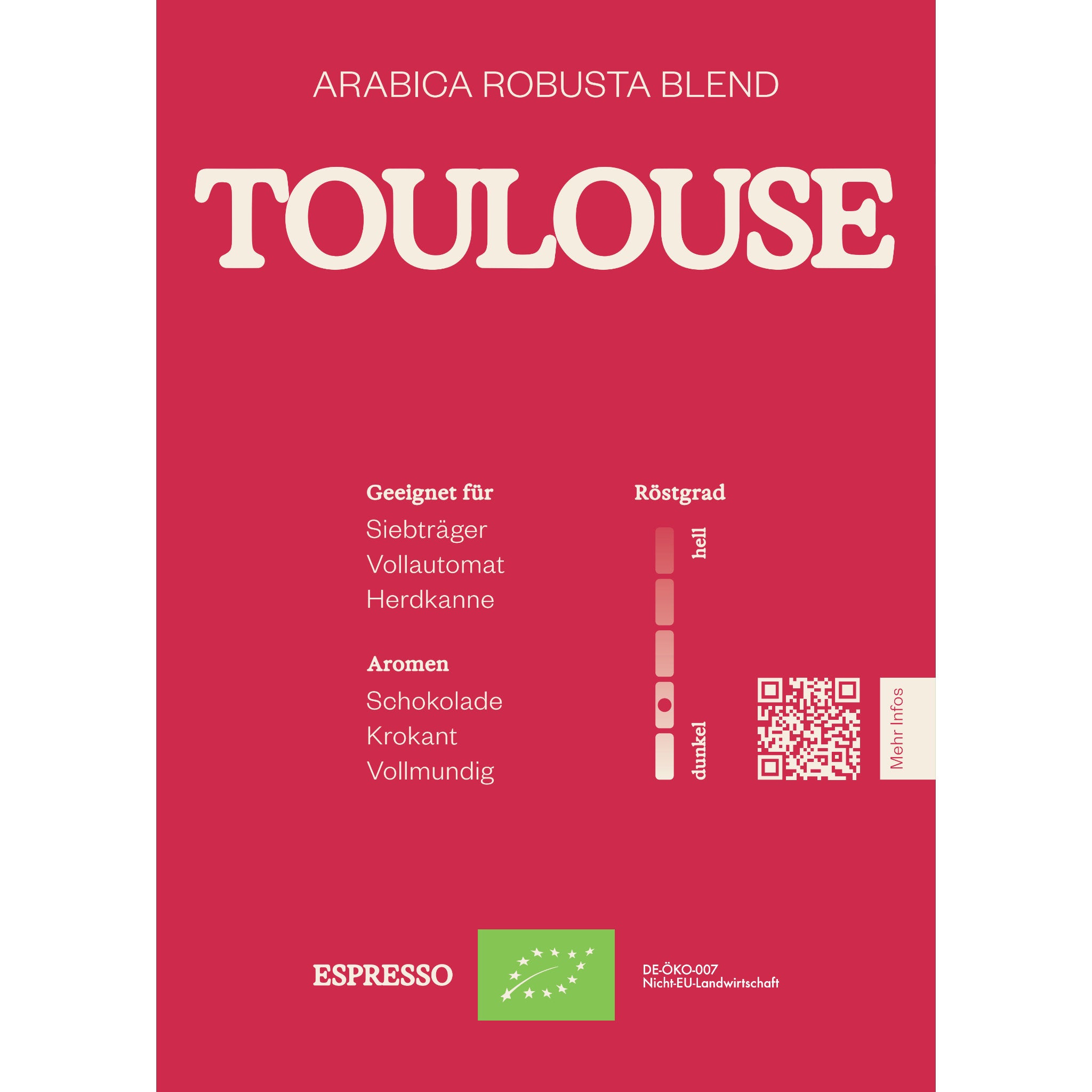
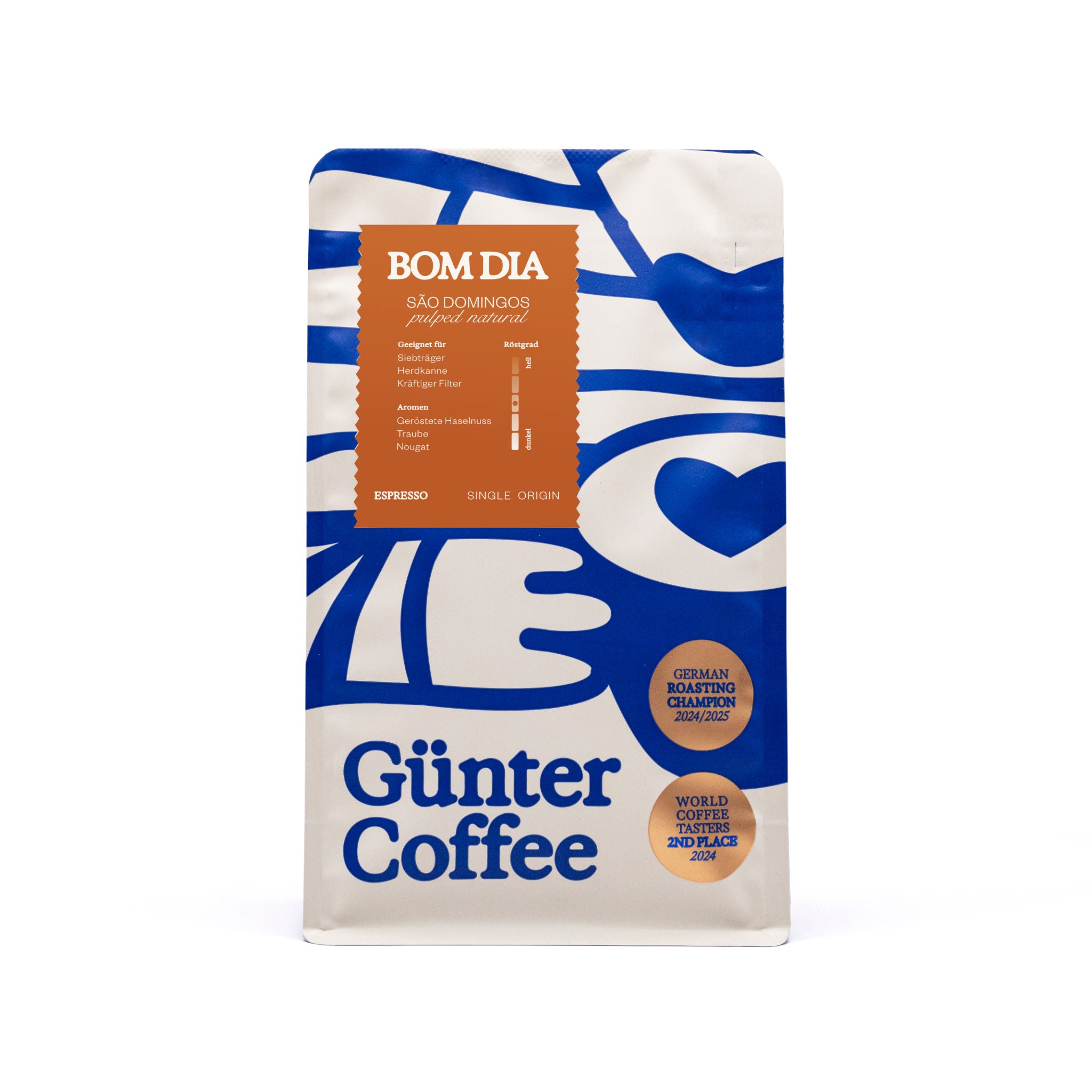
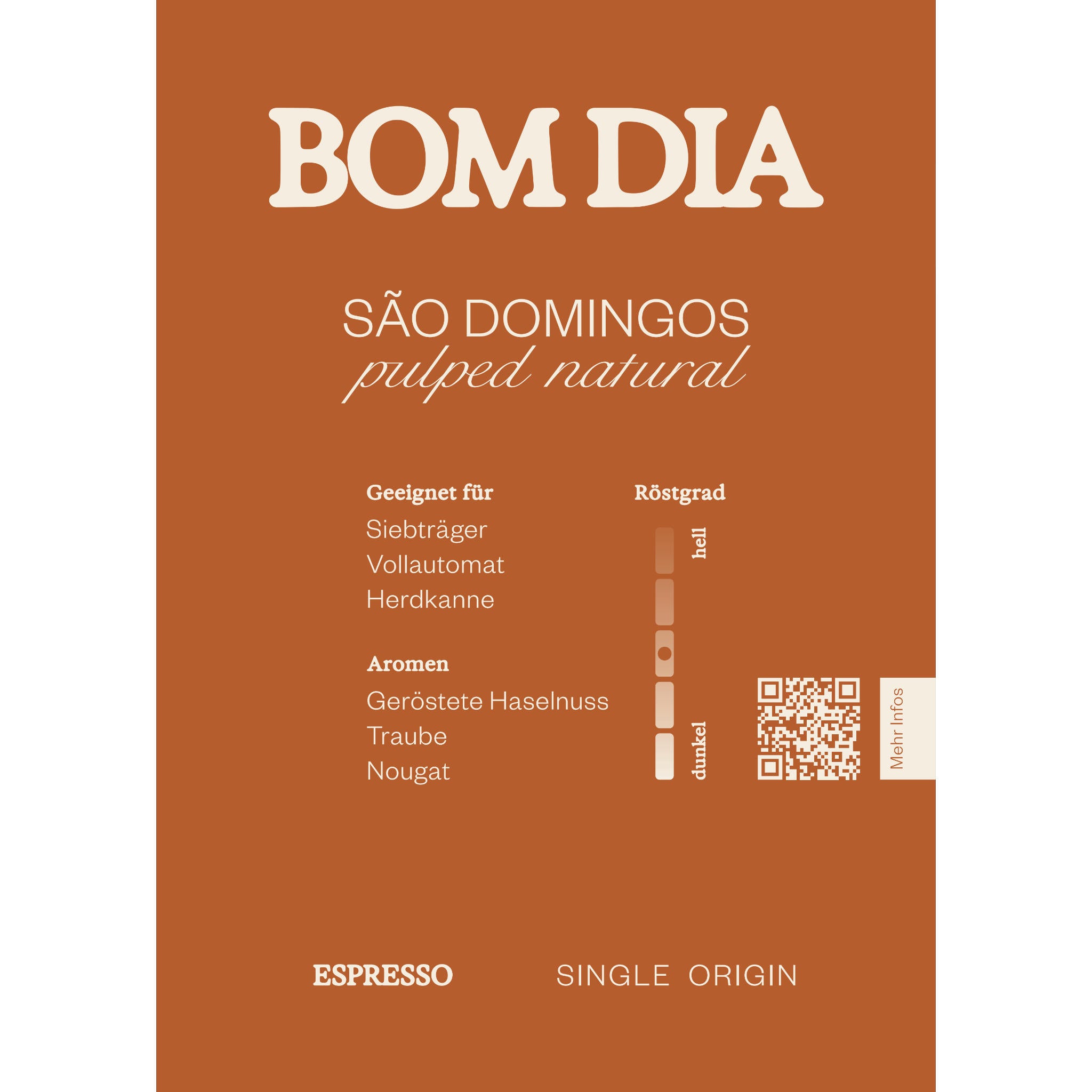
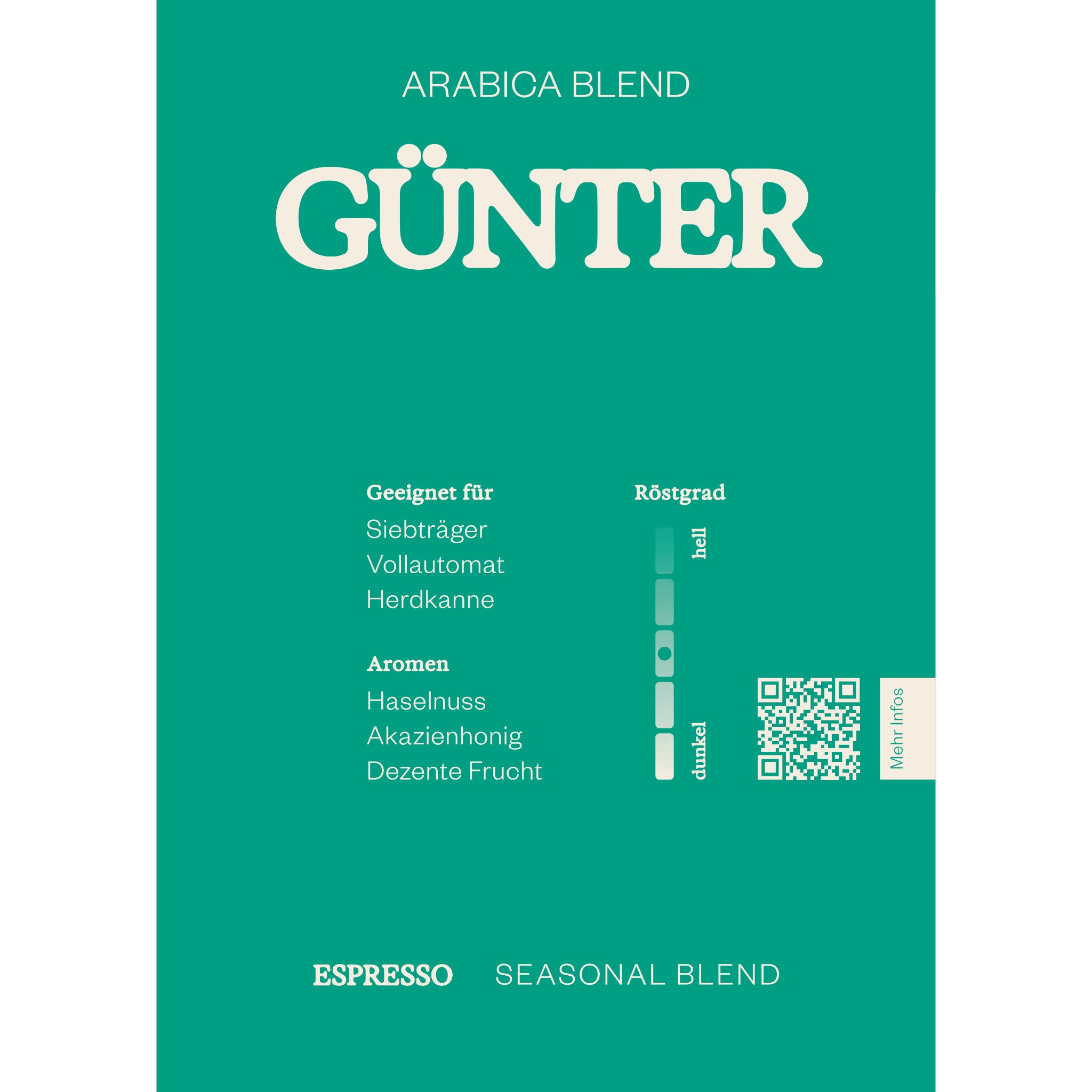
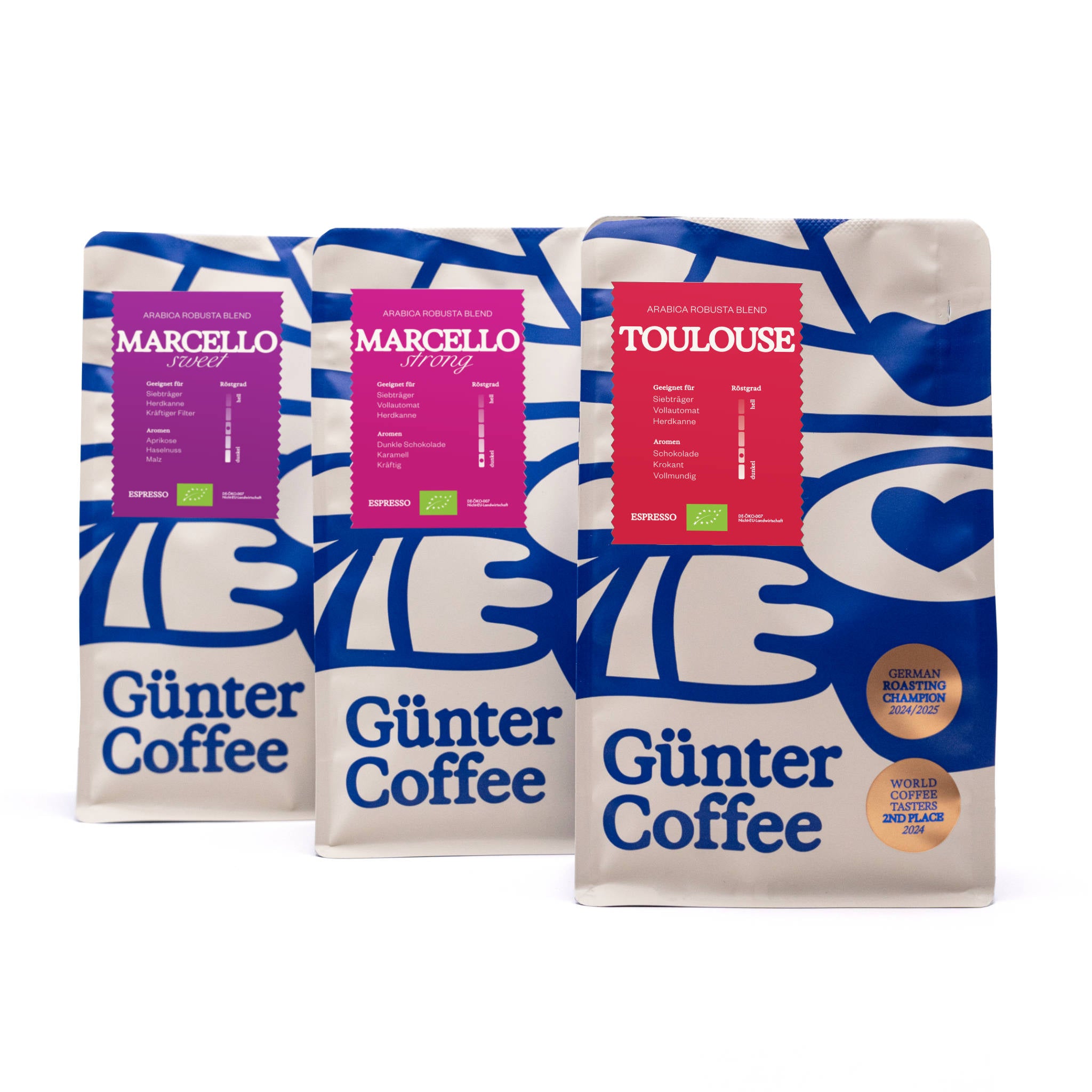
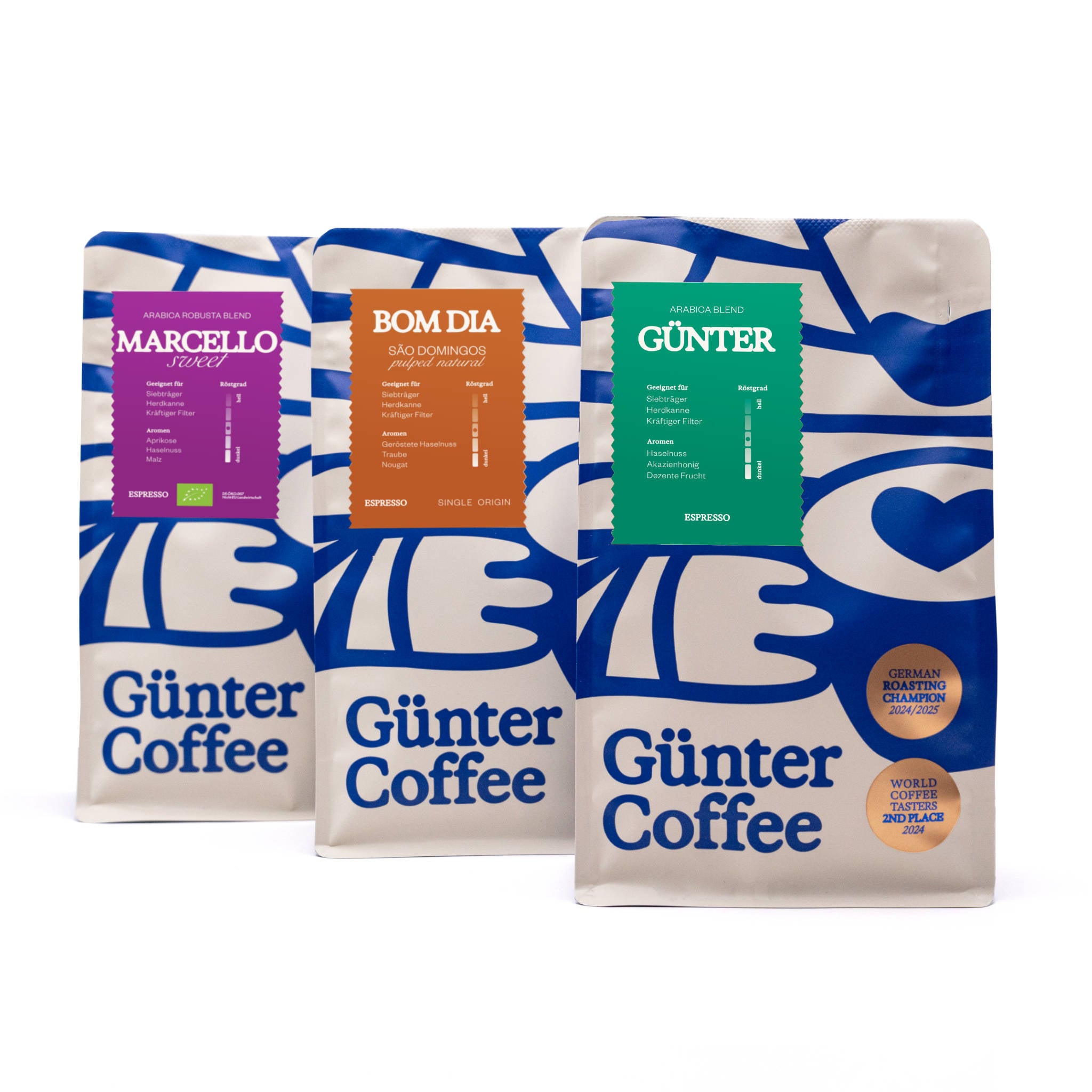
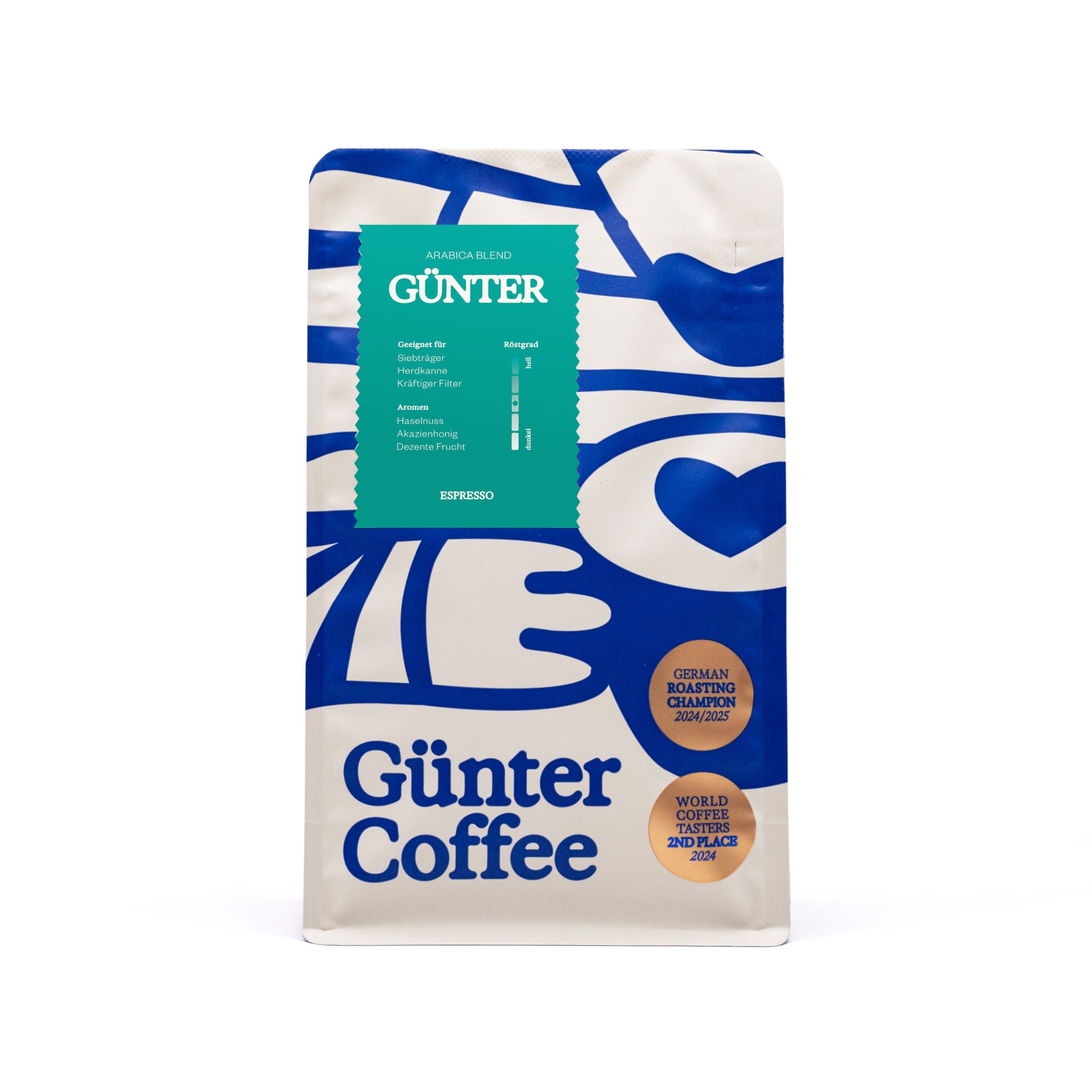
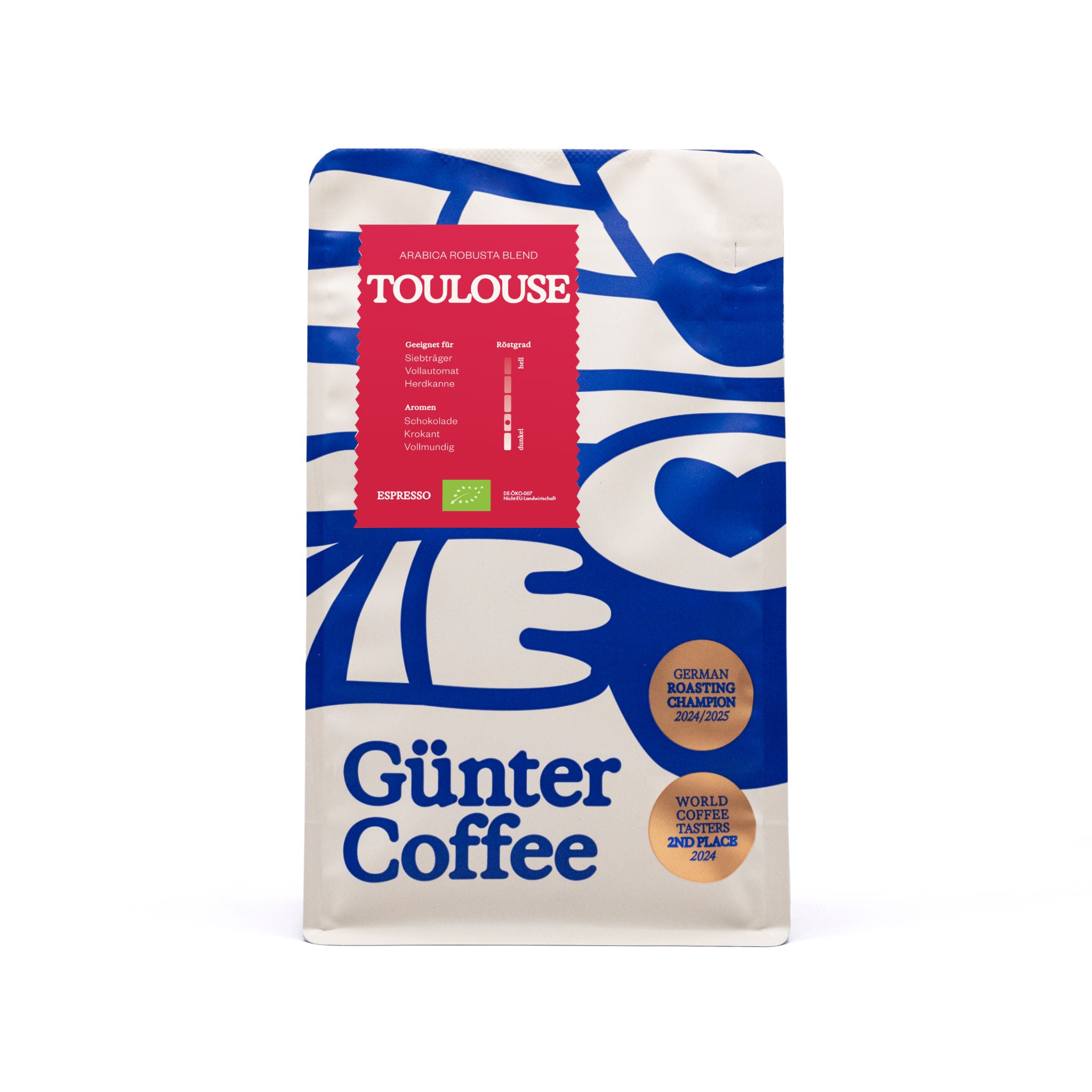
Let's start right away with a widespread myth: The "espresso bean" does not grow on any tree. Espresso is not a separate type of coffee, but simply a method of preparation. The coffee plant itself has hundreds of varieties. Each of them brings its own unique, natural flavors depending on the growing region and the prevailing microclimate. The roaster sets the direction for whether these coffee beans end up as bright, fruity filter coffee or roasted a bit stronger in the portafilter. Whether we want to stick to this is up to us. For example, in our café in Freiburg, we always serve light filter coffee roasts in the portafilter because we love the fruitiness. At the same time, we have many customers who also love to drink our tendentially light espresso roasts like Günter or Bom Dia as filter coffee.

We taste Grape, Nougat und Roasted Hazelnut. What do you taste?
Try our BOM DIA Espresso.



But when exactly does coffee become an espresso? The secret lies in the interplay of water, pressure, and time. For a classic espresso, hot water is forced with high pressure – usually around 9 bar – through very finely ground coffee. For comparison: a bicycle tire moves around 3 bar, and racing bikes up to 8 bar. This extraction process usually takes only 25 to 30 seconds. Due to the immense pressure, the aromas and coffee oils dissolve extremely quickly and intensely. This gives the espresso its concentrated, strong body and characteristic crema. If you want to test this directly in practice, take a look at our detailed guide for portafilter machines.
And what about the beloved stovetop espresso maker, which stands in so many kitchens? Even though it is popularly called an espresso maker, it only builds up a maximum of 1.5 to 2 bar of pressure during preparation. The result is a wonderfully strong coffee that makes the hearts of many people, especially in Europe, beat faster – but technically, it is not an espresso. We show you how to get the best out of the pot and avoid unpleasant bitterness in our article Preparing Coffee with a Stovetop Espresso Maker.
A brief excursion into history: Where does espresso come from?
The birth of espresso falls into the era of the industrial revolution in Italy at the end of the 19th century. In the flourishing factories, time was suddenly money, and the classic, lengthy coffee brewing methods simply took too long. A solution was needed to prepare coffee faster for impatient customers.
The name "Espresso" originated as a clever blend of two contemporary meanings: On the one hand, it refers to the caffè espresso – meaning a coffee that was freshly brewed specifically for the guest upon their express request. On the other hand, the rapid speed played an enormous role. At that time, the fastest trains were called "Express." Since the first gigantic coffee machines already looked and functioned like small steam locomotives, the name fit perfectly with the new, fast pace of life.
Angelo Moriondo achieved the first major technical milestone in 1884 in Turin when he patented the first steam-powered coffee machine. However, the principle only became truly mass-marketable from 1901 onwards, thanks to Luigi Bezzera in Milan. But these early machines only worked with the pressure of hot steam. The taste of the result was more akin to the strong coffee from a classic stovetop espresso maker, which is still immensely popular in many European countries today.
The real breakthrough, which brought us the magical 9 bars of pressure and the beloved, dense crema, had to wait until 1948. In that year, the Milanese barista Achille Gaggia revolutionized preparation with his innovative lever machine. Instead of just working with steam, hot water was now forced through the finely ground coffee with immense mechanical force. Modern espresso, as we appreciate and love it today, was born.
A Matter of Taste: What Distinguishes Good Espresso from Bad?
Many people first think of the crema when checking quality. Admittedly, a dense, hazelnut-brown foam crown looks fantastic. However, it is by no means the only – and usually not even the most reliable – indicator of a truly good espresso in the cup. The true secret lies in balance.
A perfectly extracted espresso is neither unpleasantly sour nor chalky-bitter. It combines sweetness, a subtle acidity, and a full body to create a harmonious taste experience. But when brewing in such a confined space, two classic extraction pitfalls lurk:
- The espresso is too sour (underextraction): If the water rushes through the coffee grounds too quickly, it simply doesn't have time to extract the sweet and complex aromas from the bean. What remains is a sharp, often unpleasant acidity. If your face puckers at the first sip, take a look at our guide Espresso too sour.
- The espresso is too bitter (overextraction): If, on the other hand, the coffee drips agonizingly slowly and thickly like syrup from the portafilter, the hot water was in contact with the grounds for too long. The result: undesirable bitter substances and tannins are extracted. You can find first aid for this problem in our article Espresso too bitter.
The Roast: Espresso doesn't have to taste burnt
A persistent myth holds: Beans for espresso must be deep black, almost oily shiny, and extremely dark roasted. The result is often very dominant, classic roast aromas that overshadow the actual, meaning fruity, character of the coffee. However, we believe that an excellent espresso can and should taste completely different. Of course, everyone has their own ideas here, and that's a good thing. Nevertheless, we would like to invite you to put these ideas to the test and dare something new.
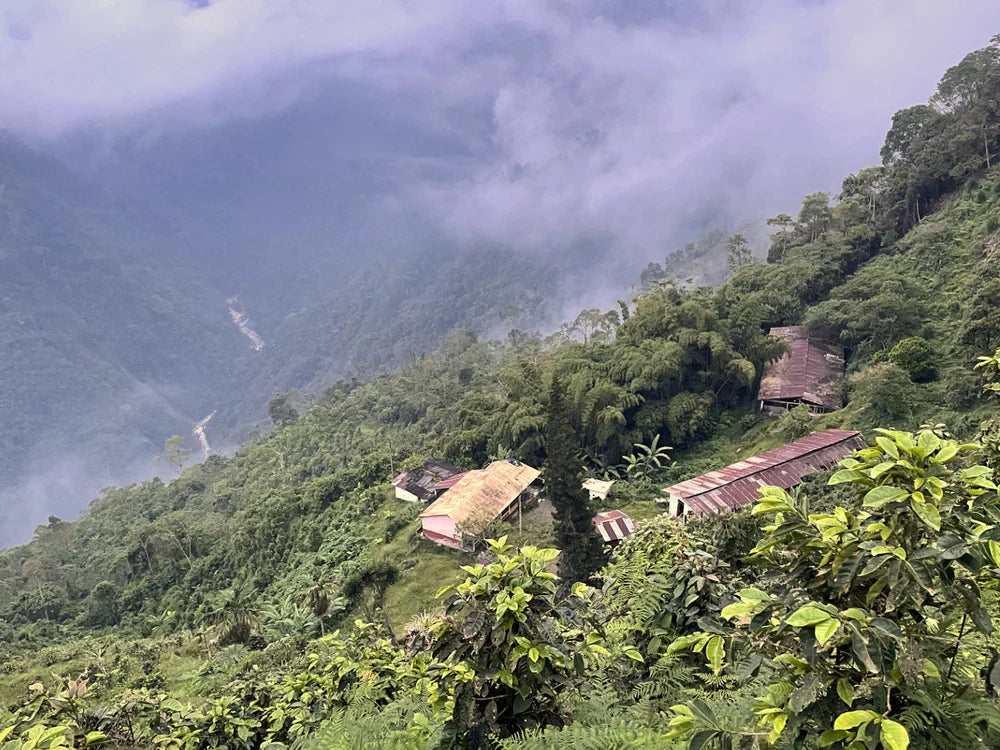
The reason? We want to give the fruity origin of coffee a stage: the coffee bean is actually the seed of a juicy coffee cherry. Depending on the variety, growing region, and microclimate, this seed takes on its very own natural aromas. To bring this enormous variety of flavors into the cup, we deliberately avoid extremely long or hot roasts that lead to dominant roast aromas. The result is an espresso that celebrates the coffee cherry as a fruit and repeatedly surprises with exciting, complex taste nuances.
The Coffee Grinder: The Secret Star of Your Coffee Corner
Anyone who invests their entire budget in a shiny espresso machine and skimps on the grinder is putting the cart before the horse. The coffee grinder is the actual heart of your setup. Even the most expensive high-tech machine will fail miserably at achieving a successful espresso extraction if the coffee grounds are unevenly ground.
Why is that? The machine essentially only provides hot water and pressure. The grounds in the portafilter provide the necessary resistance. If the coffee particles are extremely different in size, the water will relentlessly seek the path of least resistance. The result: in some places, the coffee is over-extracted, in others, it is under-extracted. The result is an unbalanced taste.
Another often underestimated problem with many coffee grinders is the so-called dead space (Retention). These are places inside the grinder where coffee grounds get stuck. The next time you brew, this old, already oxidized powder then ends up in your portafilter and distorts the taste of your fresh coffee. We present a clever solution to this problem in our article Blow Hopper: The Bellows for the Coffee Grinder.
Practical tips for everyday use:
- Adjusting a coffee grinder correctly is not that easy and requires a little practice. With our guide How to find the right grind size for coffee, you'll reach your goal much faster.
- You can cheaply prepare beans and grounds for problems with static charge or clumping with RDT and WDT. Read more about it in the article.
- Equally important: If you are negligent in cleaning your coffee grinder, you will inevitably make compromises in taste. How and how often you should best use a brush is described in the Guide: Cleaning the Coffee Grinder.
Espresso Machines: From Entry-Level to High-End
Espresso machines come in all conceivable price ranges. But why does one model cost 300 euros and another 3,000 euros? The answer can essentially be broken down into two terms: consistency and temperature stability.
A really good machine does exactly the same thing with every shot: it delivers the water at exactly the same temperature and builds up exactly the same pressure. Cheaper entry-level models often tend to have massive temperature fluctuations inside. And with espresso, one or two degrees of water temperature make an enormous difference in extraction and thus in taste.
We taste Grape, Nougat und Roasted Hazelnut. What do you taste?
Try our BOM DIA Espresso.
High-quality machines therefore rely on massive boilers and heavy brew groups. A rough distinction is made between:
- Single boilers: One boiler heats the water either for espresso extraction or for steam for frothing milk. You have to heat up or cool down in between.
- Heat exchange machines: Here, water circulates in two separate systems. You can extract espresso and froth milk simultaneously.
- Dual boilers: These machines have two completely separate boilers – one just for espresso and one for steam. This is the top class for absolute temperature stability.
Once you get the hang of it and your espresso runs out of the portafilter like melted chocolate, you not only have a great pure indulgence, but also the perfect base for all milk drinks. If you want to try it out right away, our Cappuccino Guide, for example, will help you.
Your Path to the Perfect Espresso
Espresso is not magic, but a fascinating interplay: It requires high-quality, precisely roasted beans, an absolutely even grind, and a temperature-stable machine. If you master these three adjustments and understand how extraction affects taste, nothing stands in the way of perfect coffee enjoyment in your own home.
Now it's your turn: What does your coffee corner at home look like? Do you rely on a classic lever machine, a modern dual boiler, or are you still looking for the perfect equipment? Write it to us in the comments!